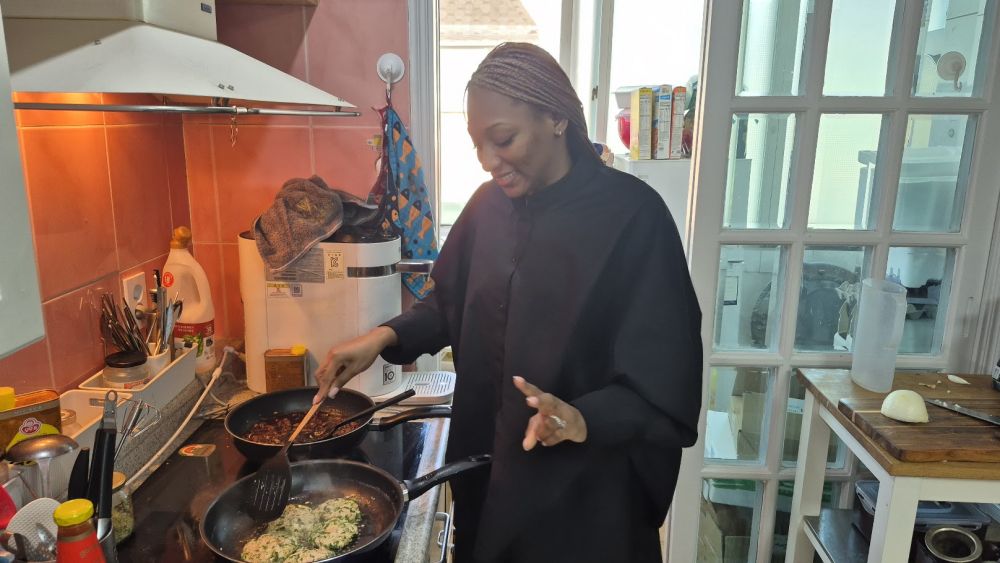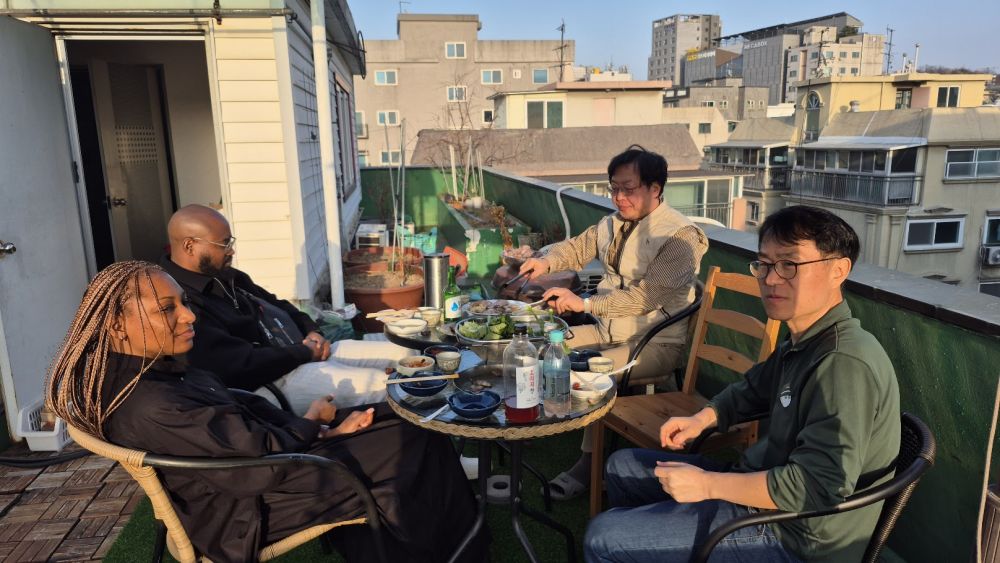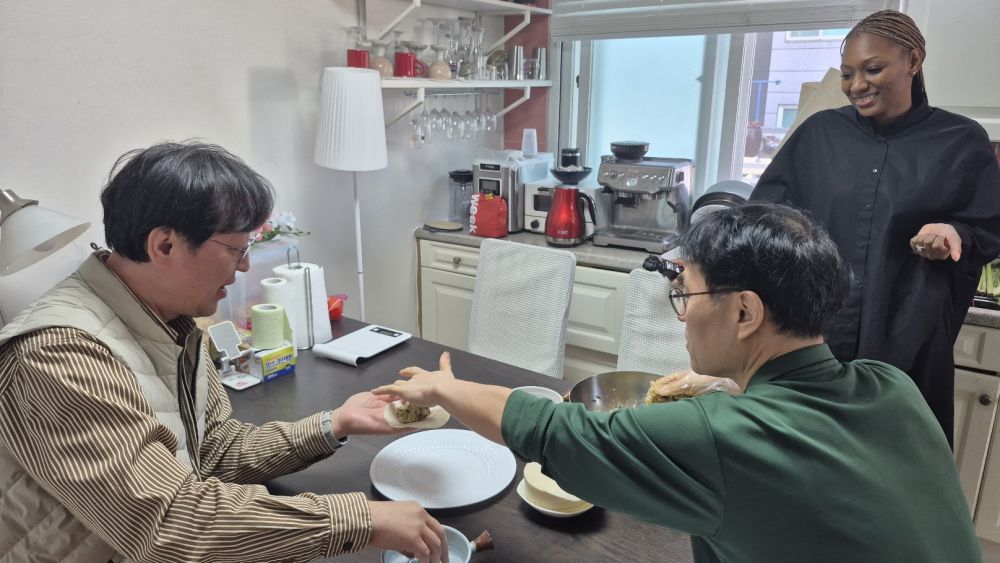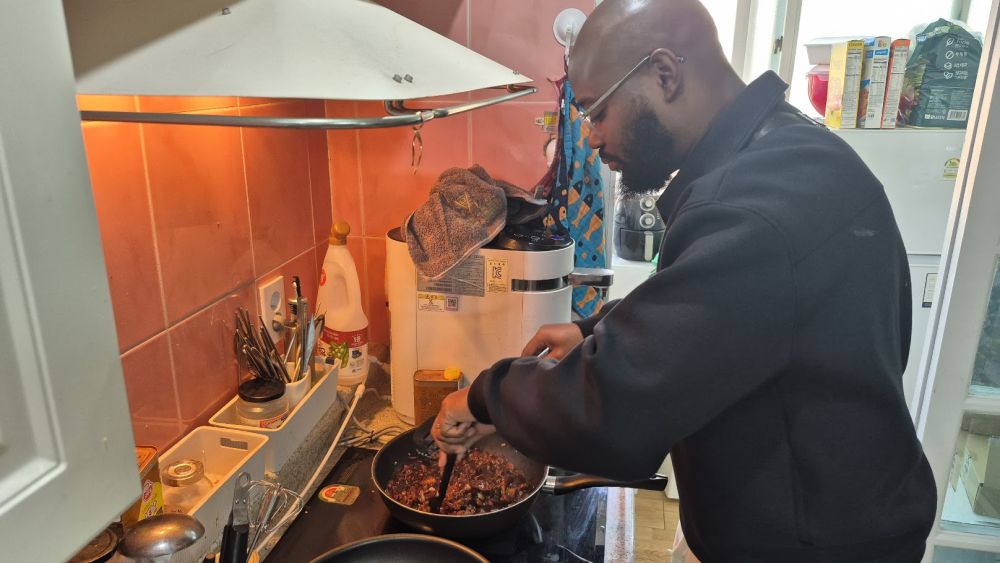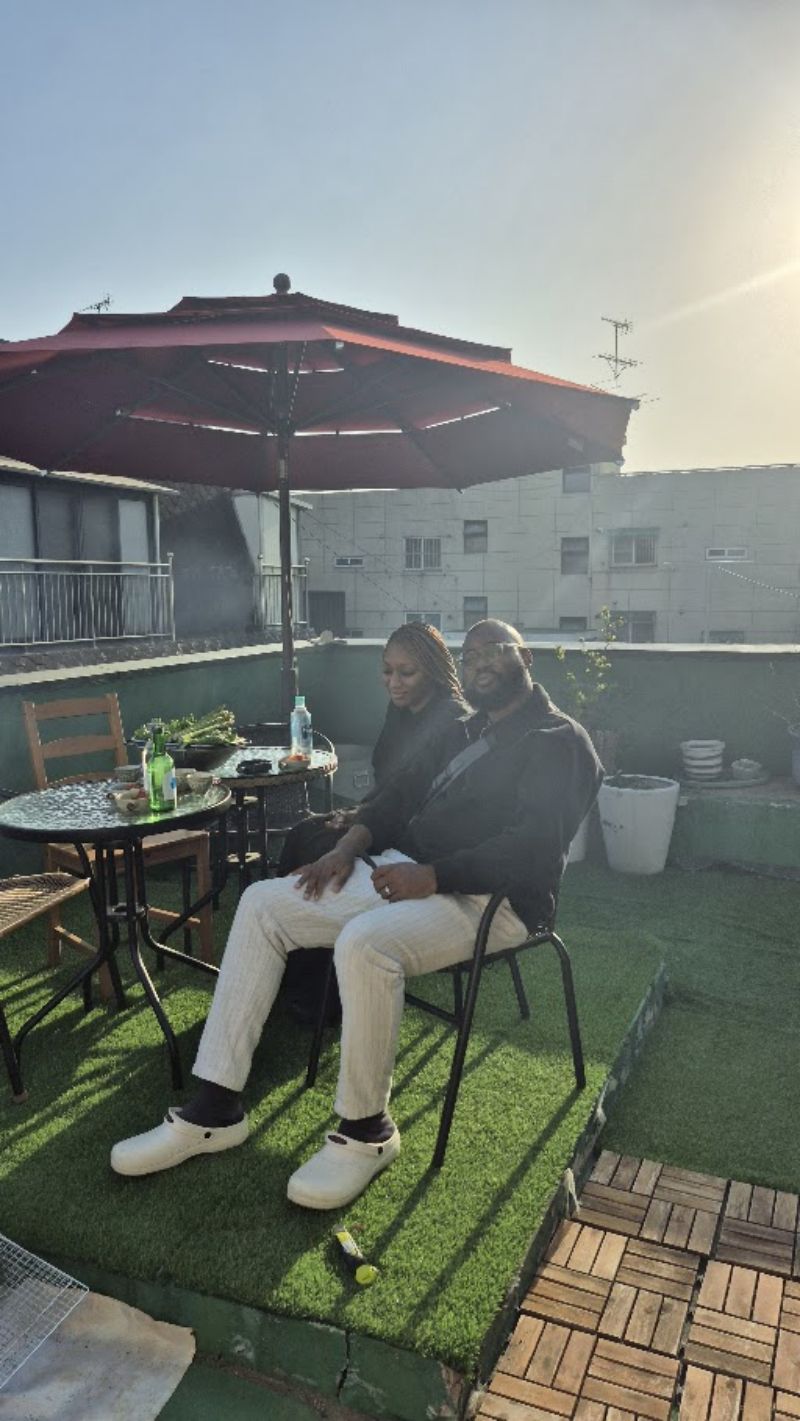
A South African couple enjoyed handmade mandu, jajangmyeon, rooftop Korean BBQ, spicy side dishes, and a private cooking class in Seoul.
Guest Information
Country: South Africa 🇿🇦
Experience: Private Korean Cooking Class
Date: 2026 – One-Day Experience
Guests: Alicia & Her Partner
Menu: Handmade Mandu, Jajangmyeon & Korean BBQ
Booking: Direct Booking through the Seoul Homestay Website
My Story
Alicia and her partner were a very special couple from South Africa.
They were the first guests to discover my website and directly book a private Korean cooking class at Mario House.
Until then, most of my guests had booked accommodation through external homestay platforms. Alicia and her partner were different because they found the Seoul Homestay website, contacted me directly, and chose to visit specifically for a Korean cooking experience.
For that reason, their visit became an important and memorable milestone for me.
Before the class, I showed them a selection of about fifteen Korean dishes and asked which foods they were most interested in learning and eating.
After discussing the different options, they selected three dishes:
- Handmade Korean mandu
- Jajangmyeon
- Korean-style barbecue
It was a very ambitious menu for one evening.
Each dish required different ingredients, preparation methods, and cooking techniques, but we wanted to give them a varied Korean food experience.
Alicia told me that they enjoyed spicy food, so I did not need to make all the side dishes excessively mild.
This allowed them to experience Korean flavors more naturally.
Preparing Handmade Mandu from Scratch
Originally, I considered using ready-made frozen dumplings.
However, my friend Victor and I decided that making mandu completely from scratch would be more interesting and memorable.
I contacted Alicia before the class and explained that we would prepare the dumpling filling, make the dough, create the wrappers, and shape each dumpling by hand.
Her response was very enthusiastic:
“Yes, from scratch please, even more fun.”
This confirmed that they did not simply want to eat Korean food. They wanted to participate in the complete cooking process.
Making mandu wrappers by hand can be challenging, especially for beginners.
The dough must be kneaded, rested, divided, rolled thinly, and shaped into individual circles.
After that, the filling must be placed in the center and the edges carefully sealed.
Neither Alicia nor her partner had made Korean dumplings before, so their first mandu were not perfectly shaped.
Some were large, some were small, and some had very creative shapes.
However, perfection was not the purpose of the class.
They laughed, practiced, helped each other, and enjoyed the experience of making every dumpling by hand.
Victor was responsible for teaching and preparing the mandu.
He demonstrated how to roll the wrappers, how much filling to use, and how to fold and seal the edges.
As the class continued, Alicia and her partner gradually became more confident.
By the end, they had made a full collection of handmade Korean dumplings.
Interestingly, the mandu became the most popular dish of the entire evening.
I originally expected the barbecue or jajangmyeon to be their favorite, but they especially enjoyed the dumplings they had made themselves.
Cooking Jajangmyeon
I was responsible for preparing the jajangmyeon.
Jajangmyeon is a popular Korean noodle dish made with a rich black bean sauce, vegetables, and meat.
Although its history is connected to Chinese cuisine, it has developed into one of Korea’s most familiar and beloved comfort foods.
I showed them how the vegetables and meat were cut, how the black bean paste was fried, and how the sauce was thickened before being served over noodles.
The dish has a savory, slightly sweet flavor and is very different from the Korean barbecue and mandu we prepared.
Including jajangmyeon gave the guests an opportunity to experience another side of everyday Korean food.
Korean Barbecue on the Rooftop
My friend Philip was responsible for the Korean barbecue.
The rooftop area at Mario House had been prepared so that Alicia and her partner could enjoy grilled meat in a relaxed and private setting.
We served the barbecue with Korean side dishes and sauces.
The combination of grilled meat, spicy side dishes, dumplings, and noodles created a large and generous Korean meal.
The cooking order was:
- Handmade mandu
- Korean barbecue
- Jajangmyeon
By the time we reached the third course, Alicia and her partner were already very full.
They told us that they could hardly eat any more food.
We had probably prepared too much for two people, but this also became part of the fun of the experience.
They had the opportunity to taste several different Korean dishes and compare the flavors and cooking styles.
Korean Food in South Africa
Alicia and her partner told us that they already liked Korean food before visiting Seoul.
They had even tried soju in South Africa.
I was impressed that Korean food and drinks had become familiar to people living so far away from Korea.
South Africa and South Korea are geographically distant, but K-food, Korean movies, television dramas, and popular culture now connect people across the world.
Their knowledge of Korean food showed how internationally recognized Korean cuisine had become.
They were not experiencing everything for the first time. Instead, they had come to Korea wanting to learn how some of the foods they already enjoyed were actually prepared.
A Very Interesting Couple
Alicia also told us that her partner worked as an actor in South Africa.
They showed us a poster for a film connected with Netflix.
I had not known about his acting work before meeting them, so it was an interesting surprise.
However, during the cooking class, they did not act like celebrities or special guests.
They were friendly, relaxed, curious, and willing to participate in every stage of the cooking process.
They listened carefully, asked questions, tried unfamiliar techniques, and laughed when the mandu did not look perfect.
Their natural and easygoing personalities helped create a comfortable atmosphere for everyone.
Transportation and Local Assistance
On the day of the cooking class, Alicia and her partner traveled from the Dongdaemun area.
I recommended that they transfer to Seoul Subway Line 5 and contact me after boarding the train.
When they approached Hwagok Station, I asked them to use Exit 7 and wait near the designated meeting point.
I then picked them up in my red Citroën C4 and brought them to Mario House.
This pickup helped them arrive without difficulty, especially because the house is located inside a residential neighborhood rather than directly beside a major tourist attraction.
After the class, I also shared photos and videos that we had taken while making the food.
I wanted them to keep the experience as a special memory of their journey through Korea.
Recipes to Take Home
I had printed recipes so that Alicia and her partner could recreate the dishes after returning home.
However, they accidentally left the printed recipes behind.
The next morning, Alicia sent me a message asking whether I could photograph the recipes and send them digitally.
This request showed that the cooking class was not only entertainment for them.
They genuinely wanted to remember the cooking methods and try making the dishes again.
I was happy to send the information they needed.
A Meaningful First Website Booking
Alicia and her partner did not stay overnight at Mario House, and they did not leave a public review on Homestay.com.
However, their visit was still one of the most meaningful experiences I hosted.
They were the first couple to book a cooking class directly through my website.
Their reservation showed that Seoul Homestay could offer more than accommodation.
International visitors could also discover private Korean food experiences, local transportation assistance, personalized menus, and cultural activities.
Their visit helped me understand the potential of offering cooking classes as a separate experience for people who were staying elsewhere in Seoul.
A guest does not necessarily need to sleep at Mario House to enjoy Korean hospitality.
They can visit for a few hours, cook with local people, eat together, learn recipes, and leave with special memories.
Alicia and her partner were willing to try everything.
They made dumpling dough, shaped mandu, learned about jajangmyeon, enjoyed Korean barbecue, tasted spicy side dishes, and shared stories about South Africa and Korean food.
The class was lively, filling, and memorable.
I am very grateful that they trusted my new website and selected Mario House for their Korean cooking experience.
Alicia, thank you for visiting us with your partner and participating so enthusiastically.
I hope you both continue enjoying Korean food and that you successfully recreate the handmade mandu and jajangmyeon at home.
I also hope that this cooking class remains a warm and enjoyable memory from your visit to Seoul.
Guest Message
Alicia did not leave a public accommodation review because they visited for a private cooking class rather than an overnight stay.
However, she sent the following message after the experience:
“Hi Mario! Thank you so much for the lovely class and for sharing the photos and videos. Wishing you all the best.”
The following morning, she also contacted me because they wanted to keep the recipes:
“Good morning. We forgot the recipes that you printed out for us yesterday. Could you please take a picture and send them to us? Thank you. Much appreciated.”
— Alicia, South Africa
Highlights of Alicia & Her Partner’s Cooking Class
Alicia and her partner enjoyed a private Korean cooking experience with three different dishes and personalized local assistance.
- Discovered the cooking class through the Seoul Homestay website
- Became the first direct cooking-class booking through the website
- Visited Mario House from the Dongdaemun area
- Received detailed Subway Line 5 transportation information
- Received a pickup from Hwagok Station
- Selected dishes from a list of approximately fifteen Korean foods
- Chose handmade mandu, jajangmyeon, and Korean barbecue
- Made mandu dough and wrappers completely from scratch
- Learned how to fill, fold, and seal Korean dumplings
- Cooked with Mario, Victor, and Philip
- Enjoyed rooftop Korean barbecue
- Tasted Korean side dishes and spicy flavors
- Learned how jajangmyeon sauce is prepared
- Selected handmade mandu as their favorite dish
- Shared their experience with Korean food and soju in South Africa
- Received photos and videos from the cooking class
- Received digital copies of the printed recipes
- Created special Korean food memories in Seoul
A Private Korean Cooking Class in Seoul
Alicia and her partner’s experience showed what travelers can enjoy during a private Korean cooking class in Seoul.
Unlike a large commercial class, a private experience can be adjusted to the guests’ food preferences, level of cooking experience, and preferred menu.
Before the class, guests can discuss which dishes they want to prepare and whether they have allergies or difficulty eating spicy food.
Depending on the selected menu, guests may learn how to prepare ingredients, make sauces, cook meat, shape dumplings, and serve Korean side dishes.
Making food by hand creates a deeper cultural experience than simply eating at a restaurant.
Guests can understand how Korean families prepare meals and why several dishes and side dishes are usually served together.
After cooking, everyone can enjoy the finished meal and share stories in a relaxed home environment.
For visitors interested in Korean food, Mario House offers a personal alternative to a large group cooking academy.
The experience can include transportation guidance, ingredient preparation, hands-on cooking, recipe information, photos, videos, and a shared meal.
Making Korean Mandu from Scratch
Handmade mandu was the most memorable part of Alicia and her partner’s class.
Many cooking classes use pre-made dumpling wrappers because they save time and are easier for beginners.
However, making the wrappers from flour and water gives guests a more complete understanding of the dish.
The process includes kneading the dough, allowing it to rest, dividing it into pieces, rolling each wrapper, adding the filling, and sealing the edges.
The first dumplings may not look perfect, but that is part of the enjoyment.
Guests can compare the different shapes they create and become more skillful as the class continues.
After the mandu are cooked, eating the dumplings that the guests made themselves creates a strong sense of achievement.
For Alicia and her partner, handmade mandu unexpectedly became the favorite food of the evening.
Photo Gallery