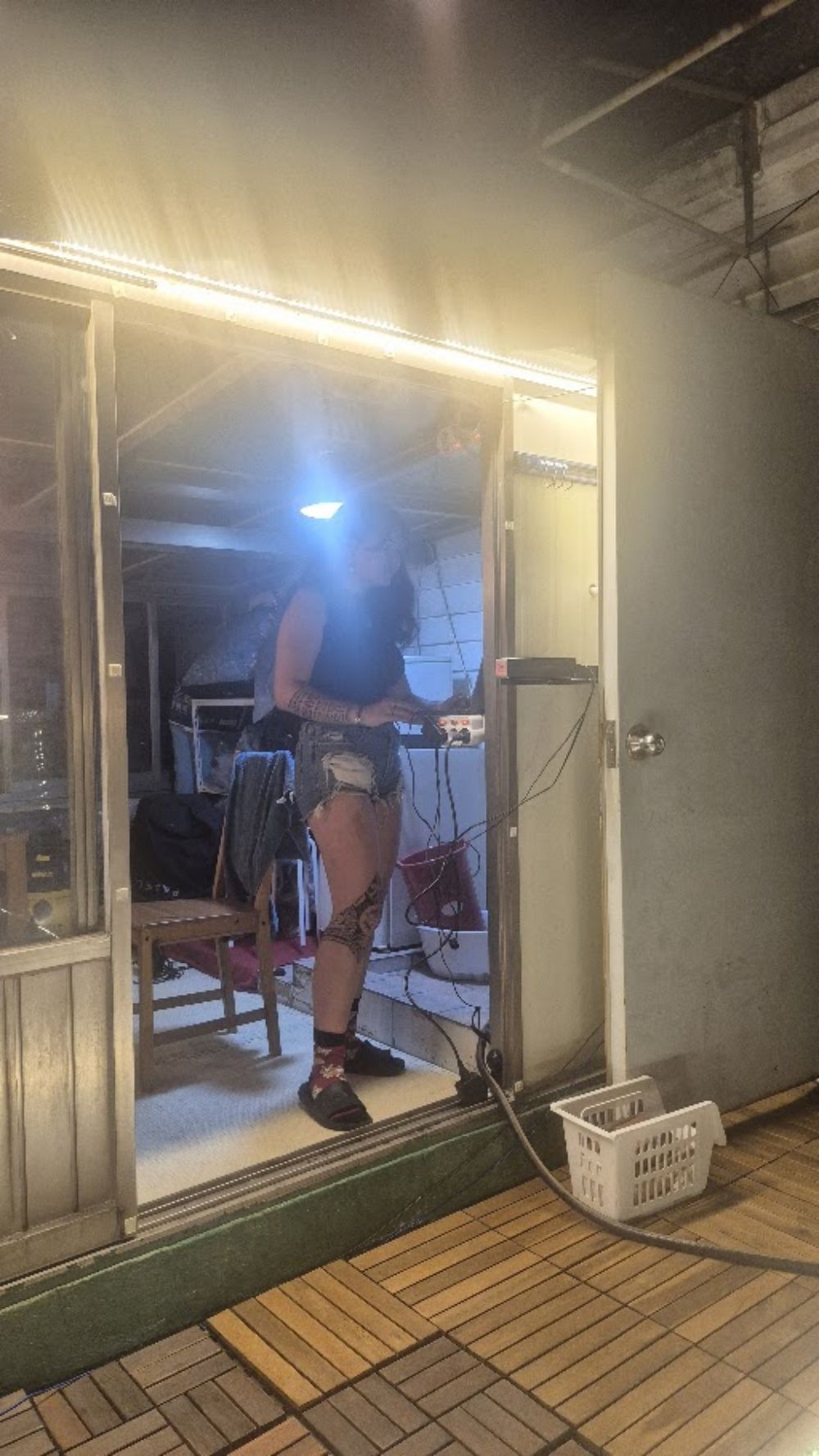
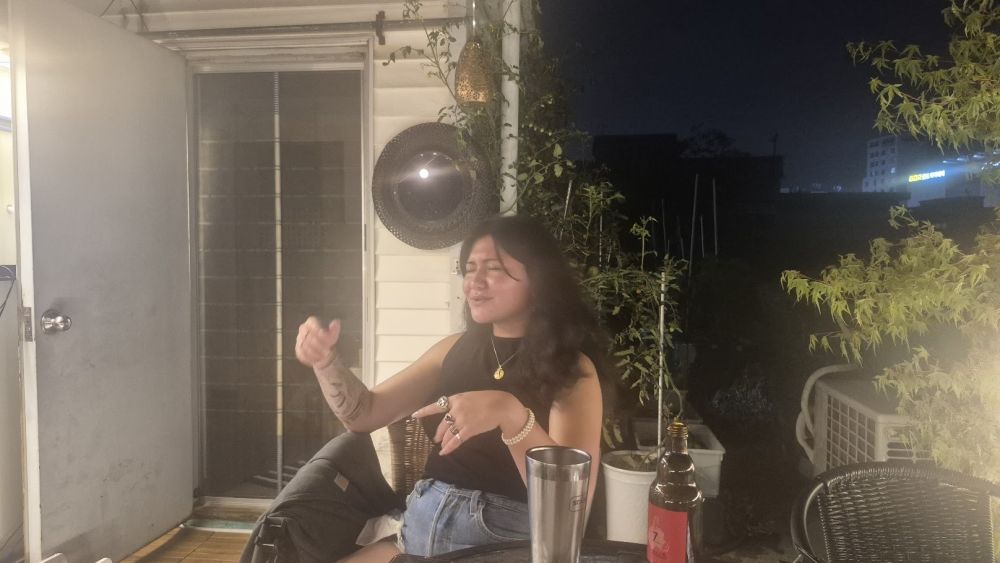
Orama, a multilingual student from Bordeaux, enjoyed rooftop drinks, home-grown tomatoes, luggage help, local guidance, and a warm Seoul homestay.
Guest Information
Country: France 🇫🇷
Home City: Bordeaux
Stay: July 2026 – Several Nights
Guest: Orama
Study: Political Science
Languages: Approximately Five Languages
Purpose: Solo Travel, Korean Culture & Preparation for Future Study in Seoul
My Story
Orama was one of the most cheerful, energetic, and interesting young travelers I welcomed to Mario House.
She was a university student in her early twenties from Bordeaux, France, but she already had more international and life experience than many people much older than her.
She was lively and knew how to enjoy music, dancing, food, and social gatherings. At the same time, she was intelligent, independent, and deeply interested in the world around her.
One of the most impressive things about Orama was her ability to communicate in approximately five languages.
Her mother had Chinese heritage, and Orama had a slightly Asian appearance. She spoke easily with people from different cultural backgrounds and adapted naturally to unfamiliar environments.
She had recently experienced the painful loss of her mother, but she continued moving forward with strength while maintaining a close and happy relationship with her father.
Although she was still young, Orama had already completed military service, participated in volunteer activities in Africa, lived abroad, and traveled independently.
Her university major was Political Science, which suited her curiosity about cultures, societies, international relations, and people from different countries.
She told me that she hoped to return to South Korea the following year to begin a master’s program at Seoul National University.
I was impressed by her ambition and the confidence with which she planned her future.
Arriving after Three Months in Japan
Before coming to Seoul, Orama had spent approximately three months in Japan for an internship.
Because she had been living abroad for an extended period, she arrived with an enormous amount of luggage.
She had two large suitcases, several bags, and many clothes and personal belongings.
Moving this much luggage through a foreign city would have been difficult, so I helped her with the heavy bags and provided transportation assistance.
At Mario House, I try to help international guests whenever they arrive with several large suitcases.
The house is located near Hwagok Station on Seoul Subway Line 5, and pickup assistance may be available depending on the guest’s arrival time and my schedule.
For a solo traveler carrying months of belongings, even a short car ride and help lifting suitcases can make arrival much easier.
An Independent and Experienced Young Traveler
Orama was comfortable traveling alone and organizing her own daily schedule.
She explored Seoul, visited Hongdae, arranged a hair appointment, met people, and enjoyed the city’s nightlife.
She did not need constant assistance, but she communicated clearly whenever she had a question or needed practical help.
Because she had already spent several months in Japan, she was accustomed to adapting to life in another country.
She understood how to use transportation, communicate with local people, and solve many travel problems independently.
However, even experienced travelers occasionally need local assistance.
I provided information about neighborhood facilities, transportation, laundry, luggage, air-conditioning use, sightseeing, and places she could visit during rainy weather.
During her stay, Korea was experiencing hot and humid summer weather.
One afternoon, I noticed that the air conditioner had accidentally been left running while she was outside.
I explained Korea’s progressive residential electricity rates and asked her to turn off the air conditioner when leaving the room.
Orama immediately apologized and promised to remember.
I also told her that she could send me a message before returning, and I would turn on the air conditioner in advance so that the room would be comfortable when she arrived.
Her response was polite and understanding, which showed that she respected the house and its rules.
A Missed Gwangmyeong Tour
One weekend, I invited Orama to join a special rainy-day tour with my friends Philip and Victor.
Victor is a certified professional tour guide, and Philip is an energetic and entertaining friend who often joins activities with international guests.
Our planned itinerary included:
- Gwangmyeong Upcycle Art Center
- Gwangmyeong Cave
- Gwangmyeong Speedom
- Gwangmyeong Traditional Market
- Food and drinks with local friends
Orama initially accepted the invitation and said that the plan sounded very good.
She also mentioned that she might visit a nightclub in Hongdae the previous evening but expected to be ready on time.
Unfortunately, she had a difficult experience during the night and felt unwell the following morning.
She apologized and explained that she needed to rest and could not join the tour.
I told her not to feel guilty and encouraged her to recover comfortably at Mario House.
Because it was raining heavily, I also recommended a nearby sauna where she could relax if she felt better later.
Her shoes had become soaked by the rain, so I placed them near the shoe dryer and dried them for her.
Later, she thanked me warmly for helping with the shoes.
Home-Grown Tomatoes from the Rooftop Garden
One of Orama’s favorite parts of Mario House was the rooftop garden.
I grow various vegetables, herbs, and fruits on the rooftop, including organic cherry tomatoes.
Orama especially enjoyed the freshly picked cherry tomatoes.
They were simple home-grown food, but she appreciated their freshness and natural flavor.
The rooftop garden offers international guests a different kind of Seoul experience.
Instead of seeing only buildings and tourist attractions, they can discover that vegetables and fruit can also be grown on the rooftop of a residential home.
Guests may see tomatoes, herbs, green onions, lettuce, peppers, and other seasonal plants depending on the time of year.
For Orama, eating tomatoes directly from the rooftop garden became one of the small but memorable parts of her stay.
A Considerate Guest in the Shared Kitchen
Orama was thoughtful about using food from the shared kitchen.
One day, she used some onions and cheese and left 1,500 KRW on the table to pay for them.
I explained that she did not need to pay because basic food in the guest kitchen was complimentary for guests to enjoy.
I asked her to take the money back and use it for snacks or drinks during her trip.
She thanked me and appreciated the gesture.
Her attempt to pay for a small amount of food showed that she was considerate and did not take shared items for granted.
Solving Her Luggage Problem through Donation
After living in Japan for three months and traveling to Korea, Orama realized that she had far too many clothes and belongings to take back to France.
She asked whether there was a place in Seoul where she could quickly sell some of her clothes.
I explained that selling ordinary clothes through Korean secondhand platforms would be difficult within only one or two days.
Most local secondhand transactions require communication in Korean, arranging meetings with buyers, and waiting for interested people.
Unless the clothes were luxury brands offered at extremely low prices, selling everything before her departure would be unrealistic.
I suggested two practical choices:
- Pay for additional luggage and take the clothes back to France
- Leave the unnecessary clothes at Mario House so they could be donated to a Korean charitable organization
Orama liked the idea of donating them.
She carefully sorted the clothes she could not carry and placed them inside a separate bag.
She even used her own bag so that I would not need to provide one.
She told me that she would be happy knowing that the clothes could help other people.
“I’ll be happy to know that it will help charity.”
Her response showed her generous and socially responsible personality.
Instead of simply throwing away unwanted clothes, she wanted them to have a useful second life.
This also connected naturally with her previous volunteer experience in Africa and her interest in helping others.
Weighing Her Luggage before Departure
After sorting her belongings, Orama wanted to make sure that her suitcases did not exceed the airline’s weight limit.
She asked whether I had a scale she could use.
I had both a regular household scale and a portable luggage scale, so she could check each suitcase before going to the airport.
This allowed her to reorganize the bags, reduce unnecessary weight, and avoid unexpected baggage charges at check-in.
Providing simple practical items such as a luggage scale can be very useful for long-term international travelers.
Guests who have lived abroad for several months often collect more belongings than expected and need to make difficult packing decisions before flying home.
Our Final Rooftop Evening
The greatest highlight of Orama’s stay was our final evening together on the rooftop.
Because she had missed the Gwangmyeong tour, she contacted me on her final day and asked whether I would like to share a drink with her on the rooftop.
I had a family dinner appointment earlier that evening, but I expected to return around 7:00 or 8:00 PM.
We agreed to spend some time together after I returned.
That night, the rooftop lights created a warm and beautiful atmosphere above the residential neighborhood.
I introduced Orama to several Korean traditional drinks.
We talked about travel, France, Korea, Japan, her studies, her family, and her future plans.
Orama was naturally full of energy.
She sang songs, danced, laughed, and made the rooftop evening lively and entertaining.
She even knew several humorous and slightly impolite Korean expressions, which made me laugh.
Her personality was a wonderful combination of intelligence and playfulness.
She could discuss politics, languages, international experience, and future graduate studies, and then suddenly begin dancing or singing under the rooftop lights.
The evening was not a formal farewell event.
It was simply two people from different generations and countries sharing drinks, stories, music, and laughter.
This kind of natural cultural exchange is one of the reasons I enjoy operating a homestay.
An Invitation to Bordeaux
Orama lived in Bordeaux, one of France’s most internationally recognized wine regions.
She told me that if I enjoyed wine, I should visit Bordeaux and contact her.
I appreciated the invitation very much.
Many guests arrive as strangers, but shared meals and conversations can create connections that continue after they leave Korea.
Her invitation reminded me that a homestay relationship does not always end at checkout.
It may lead to future meetings in Seoul, France, or another destination.
Future Plans at Seoul National University
Orama hoped to return to South Korea the following year for a master’s degree at Seoul National University.
Her Political Science background, language ability, international experience, and confidence would be valuable for graduate study in Seoul.
I hope that her plan becomes a reality.
If she returns to Korea as a student, she will experience a different side of life compared with a short holiday.
She will need to study, build a routine, make friends, manage accommodation, and adapt to academic life in Korea.
However, based on her independence and previous experience in Japan, I believe she has the ability to succeed.
A Warm Farewell at the Airport
On the morning of her departure, Orama wanted to reach Incheon Airport early.
Because she still had several heavy bags, I offered to drive her to the airport bus stop.
I helped her move the luggage and made sure she could begin the journey comfortably.
After reaching the boarding gate, she sent me a warm farewell message:
“Thank you for everything! Be sure that if I come back to Korea, I’ll come to your house.”
She also wished me good luck with an upcoming hospital appointment and encouraged me to remain kind.
It was a thoughtful final message and a perfect reflection of her personality.
A Guest Full of Energy and Potential
Orama was not an ordinary university student.
She had experienced military life, volunteering in Africa, an internship in Japan, solo international travel, language study, and the loss of someone deeply important to her.
Despite these experiences, she remained cheerful, humorous, curious, and full of energy.
She enjoyed nightlife and music but was also serious about politics, education, and her future.
She could be playful and spontaneous while still being thoughtful about charity, shared food, house rules, and the people around her.
Hosting Orama reminded me that young travelers can bring enormous knowledge and experience into a home.
Age does not always determine maturity.
Although she was in her early twenties, she had already developed independence, resilience, communication skills, and an open-minded view of the world.
Orama, thank you for staying at Mario House and sharing your bright energy with me.
Thank you for enjoying the rooftop garden, trying Korean traditional drinks, donating your clothes, and filling our final evening with singing and laughter.
I sincerely hope that you remain healthy and happy and that your plan to return to Korea for graduate school becomes successful.
You will always be welcome at Mario House.
The next time you return to Seoul, I hope we can share more rooftop tomatoes, enjoy another evening under the lights, and create even more wonderful memories.
Guest Message
Orama did not leave a public accommodation review, but she sent several warm messages during her stay and after reaching the airport.
“Thank you for your message. I’ll sort the clothes, and I’ll be happy to know that they will help charity.”
“Thank you a lot for the shoes!”
“Thank you for everything! Be sure that if I come back to Korea, I’ll come to your house. Thank you for everything again. Stay kind.”
— Orama, France
Highlights of Orama’s Stay
Orama enjoyed an energetic and meaningful Seoul stay filled with local food, rooftop memories, practical assistance, and cultural exchange.
- Visited Seoul after completing a three-month internship in Japan
- Arrived with two large suitcases and several heavy bags
- Received transportation and luggage assistance
- Stayed in a residential Seoul neighborhood
- Explored Hongdae and other areas independently
- Received practical information about local facilities and transportation
- Received help drying shoes during the rainy season
- Received information about a nearby Korean sauna
- Was invited to a Gwangmyeong tour with local friends
- Enjoyed complimentary food from the shared kitchen
- Offered payment for onions and cheese she had used
- Enjoyed organic cherry tomatoes grown on the Mario House rooftop
- Received help finding a solution for excess clothing
- Donated unwanted clothes to a Korean charity
- Used a luggage scale before departing
- Tasted several Korean traditional drinks
- Enjoyed a memorable final-night rooftop gathering
- Sang, danced, and shared travel stories with Mario
- Invited Mario to visit Bordeaux, France
- Discussed returning to Korea for graduate school
- Received transportation assistance to the airport bus stop
- Promised to return to Mario House on her next Korean trip
A Solo Traveler Homestay in Seoul
Orama’s visit showed how a solo traveler homestay in Seoul can provide both independence and personal support.
Solo travelers often want the freedom to plan their own days, meet friends, explore nightlife, visit attractions, and change plans without following a group schedule.
However, they may still need practical help with airport transportation, heavy luggage, local facilities, laundry, food, weather, and communication.
At Mario House, guests can travel independently while communicating directly with a local host whenever they need assistance.
The house is located near Hwagok Station on Seoul Subway Line 5.
This provides transportation connections to central Seoul, Gimpo Airport, Yeouido, Jongno, and other parts of the city.
The surrounding residential neighborhood also gives guests an opportunity to experience everyday Seoul life outside the busiest tourist districts.
Depending on the host’s schedule and guest’s interests, the experience may include shared meals, local recommendations, rooftop conversations, neighborhood assistance, or activities with other guests and local friends.
Orama remained independent throughout her visit but also enjoyed knowing that help was available when she needed it.
Rooftop Drinks and Home-Grown Food in Seoul
The Mario House rooftop was an important part of Orama’s stay.
The rooftop includes seasonal plants, vegetables, herbs, lighting, and a comfortable area where guests can relax.
Depending on the season, guests may see tomatoes, peppers, lettuce, green onions, herbs, and other produce growing above the city.
Orama especially enjoyed the organic cherry tomatoes.
On her final evening, the rooftop became a space for drinks, music, dancing, and conversation.
Experiences like this are different from visiting a commercial rooftop bar.
Guests can relax in a private home environment, communicate with a local host, and experience a quiet residential view of Seoul.
The purpose is not luxury but personal connection.
For travelers interested in food, conversation, and everyday Korean hospitality, a simple rooftop evening can become one of the most memorable parts of the trip.
Clothing Donation and Responsible Travel
Long-term travelers sometimes reach the end of a journey with more luggage than they can carry.
Clothes, souvenirs, books, and personal items can create expensive additional baggage fees.
Selling ordinary clothing quickly in Korea may be difficult because local secondhand platforms usually require Korean communication and in-person meetings.
Donation can be a more practical and responsible alternative when the items are still clean and usable.
Orama sorted the clothes she no longer needed and prepared them in a separate bag for charity.
This prevented useful items from being thrown away and allowed them to help other people.
Travelers considering donation should make sure that the clothing is clean, wearable, and properly packed.
They should also discuss arrangements with the host before leaving anything behind.
Orama handled the process responsibly and was happy that the clothes could have a useful second life.
Photo Gallery